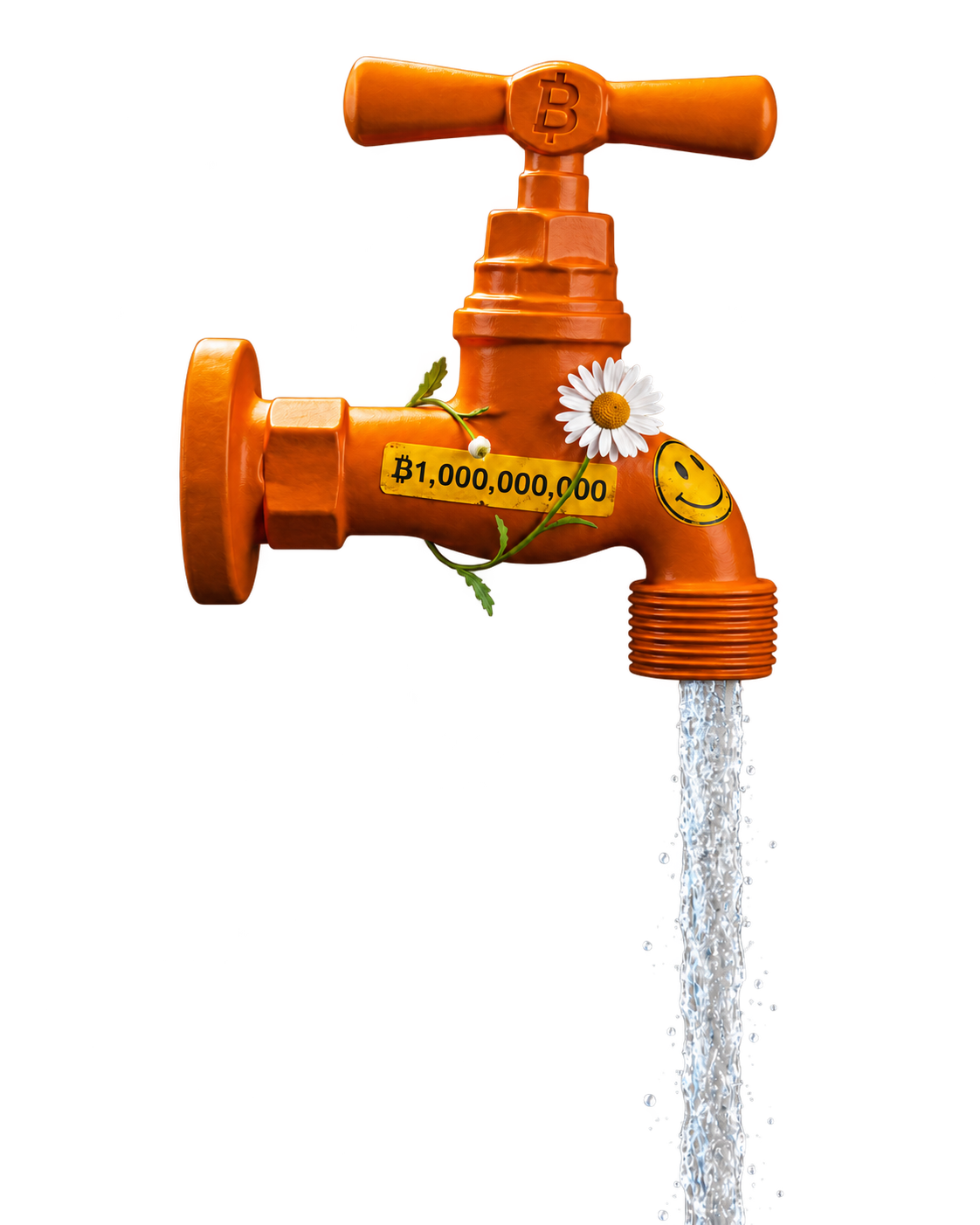
In June 2010, Gavin Andresen launched a website that gave newcomers five bitcoins so they could try using Bitcoin.
On June 11, 2010, he announced his first Bitcoin coding project on the Bitcoin forum: a website at freebitcoins.appspot.com, stocked with 1,100 BTC and offering five bitcoins per person. Buying Bitcoin was still cumbersome, and waiting for a computer to mine some could take time. The faucet provided another way to obtain coins and start experimenting. Gavin's original announcement
Those amounts had a very different monetary value then. Gavin later described Bitcoin rising from approximately $0.005 to $0.06 during the faucet's early months. Using that earlier price reference, a five BTC claim represented roughly 2.5 cents. Gavin's August 2010 explanation
A week after the announcement, Satoshi Nakamoto joined the conversation.
On June 18, he wrote:
“Excellent choice of a first project, nice work.”
Satoshi explained that he had considered building the same service himself. As mining became harder, newcomers would need another way to obtain coins to experiment with. He suggested that donations could replenish the faucet and observed that displaying its remaining balance would encourage contributions. He also recommended including a donation address on the page, ideally rotating it whenever funds arrived. Satoshi's reply
Community contributions had already begun. On launch day, the forum user lachesis reported receiving five BTC and sending 50 BTC back. Other participants suggested improvements, tested the website, and discussed how to keep it funded. The launch-day discussion
By July, demand had increased considerably.
On July 12, Gavin reported that more than 5,000 BTC had flowed out of the faucet since he refilled it the previous night, amid an influx of visitors from Slashdot. He asked early adopters who had mined large balances to contribute so more people could try Bitcoin. The following day, he thanked donors and reported roughly 2,000 BTC remaining in the faucet. The donation appeal
Recipients also returned coins after testing the system. XaviorPenguin offered to return the five BTC received, explaining that the purpose had been to see how everything worked. BitLex said the five coins had already been sent back and offered to return future claims as well. These exchanges let participants test both receiving and sending Bitcoin while replenishing the pool for others. Recipients returning their coins
Larger contributions helped maintain the service. On August 4, BitcoinFX announced a 500 BTC donation in the original thread. Gavin subsequently thanked BitcoinFX while discussing measures to protect the faucet before refilling it. BitcoinFX's donation post
Gavin also discussed making the faucet's activity publicly auditable. In a June 19 reply, he explained his preference for a consistent donation address so anyone could inspect incoming donations and outgoing payments. He suggested building a transaction visualization tool to explore those flows, including how many withdrawn coins were donated back. Gavin's discussion of transparency
The faucet also encountered repeated claims and automated abuse.
Although it became associated with solving a CAPTCHA to receive coins, Gavin initially tried to keep the service simpler. By June 24, he reported enabling reCAPTCHA for everyone after someone apparently automated claims through proxies. Satoshi subsequently suggested limiting payments across related IP addresses and reducing the reward if necessary to keep the service manageable. The June discussion about abuse
By August, Gavin was considering reducing the standard reward to 0.5 BTC. He also expressed reluctance to require every newcomer to complete a lengthy registration process. The discussion covered rate limits, browser fingerprinting, and additional checks for suspicious activity. Satoshi supported rate limits and lowering the payout as conditions changed. The August discussion
The surviving threads document how the faucet developed through contributions from its operator, donors, recipients, and other forum participants. Alongside the distribution of coins, the discussions covered usability, funding, transparency, security, and access for newcomers.
Did anyone here use the original faucet, or receive their first bitcoins through another early community giveaway? Share any experiences, screenshots, or historical links below.